The Female Iron Age Queen Who Helped Bring Britain to its Knees
Summary
A historian argues that King Verica, the Iron Age ruler of the Atrebates, was a woman, which changes how the Roman invasion of Britain is understood.
Verica ruled the Atrebates in southern Britain as a client king of Rome. According to the Roman historian Cassius Dio, Verica's exile around 40 CE gave Emperor Claudius a pretext to invade Britain, starting a campaign that led to Roman conquest. Archaeologist Miles Russell of Bournemouth University, in the book Caratacus: Great King of Britain, contends that Dio's account rests on a mistaken assumption that Verica was male.
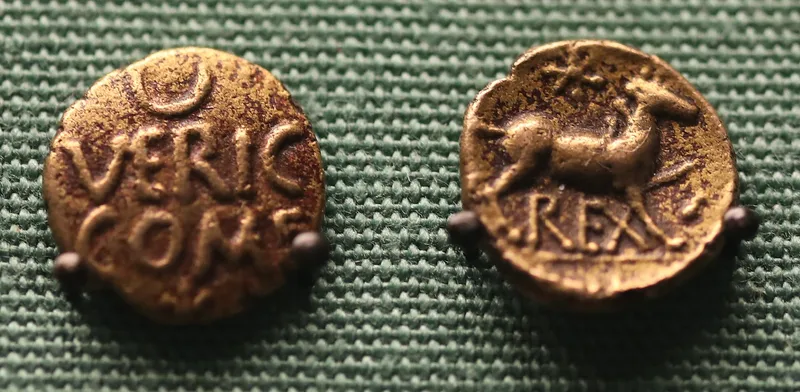
Russell cites several clues. The name Verica ends in "a," as do other names of clearly female figures of the period, including Boudica. The coins bearing Verica's name use the Latin title rex, which Russell says was gender-neutral and showed the emperor's approval. The letters "COMF" on the coins could mean "daughter of Commios" rather than "son of Commios," and the coin fronts show a bare-breasted woman.
If Verica was a woman, Russell argues, the story fits Dio's portrayal of Claudius as an easily swayed leader. Russell says Dio implied the invasion was driven by a "barbarian femme fatale," while the invasion was in fact Claudius's chance to prove himself a military leader.
Key points
- Cassius Dio says Verica's exile around 40 CE prompted Claudius's invasion of Britain.
- Russell argues Verica was the daughter of Commius, not the son, and was female.
- The name ending, the coin title rex, and the "COMF" inscription support the claim.
- Coin fronts depict a bare-breasted woman, which Russell reads as a sign Verica was female.
- The revised reading casts Claudius's invasion as a bid for military credibility.
Why it matters
The argument shows how assumptions about gender in 19th-century scholarship may have shaped the historical record of Rome's conquest of Britain.
- Roman conquest of Britain
- Iron Age Britain
- Atrebates tribe
- Emperor Claudius
- historical gender bias
Coverage
source covering this story
1 independent source
Only Nautilus is covering this story.